Babu Lal Chaturvedi Calendar April 2026 spans the last two weeks of Chaitra and the first two weeks of Vaishakh, in Vikram Samvat 2083 and Shaka Samvat 1948. The month opens in the closing days of Chaitra Shukla Paksha — the festive fortnight that follows Chaitra Navratri and Ram Navami — and reaches its first high point almost immediately, on Chaitra Purnima, when Hanuman Jayanti is celebrated. From there the month moves into Krishna Paksha, pauses at the Vaishakh Amavasya around mid-month, and then opens into Shukla Paksha of Vaishakh, culminating in one of the year’s most auspicious “self-attained” (swayam-siddha) days: Akshaya Tritiya.
Unlike many recycled Panchang pages online, every date, tithi and time in this guide has been checked against multiple independent Panchang sources and cross-verified using standard Vedic astronomical formulas (Surya-Chandra longitude difference for tithi, Lahiri ayanamsa for nakshatra, and the classical eight-part day division for Rahu Kaal). Where a popular circulating date is actually wrong, we’ve flagged it below.
Complete 30-Day Panchang Table — April 2026 (New Delhi, IST)
| Date | Day | Tithi & Paksha | Nakshatra | Yoga | Sunrise | Sunset | Rahu Kaal |
|---|---|---|---|---|---|---|---|
| 1 Apr | Wednesday | Chaitra Shukla Chaturdashi | Uttara Phalguni | Vajra | 06:13 AM | 06:38 PM | 12:25 PM–01:58 PM |
| 2 Apr | Thursday | Chaitra Shukla Purnima (Hanuman Jayanti) | Hasta | Siddhi | 06:11 AM | 06:38 PM | 01:58 PM–03:32 PM |
| 3 Apr | Friday | Chaitra Krishna Pratipada | Chitra | Vyatipata | 06:10 AM | 06:39 PM | 10:51 AM–12:25 PM |
| 4 Apr | Saturday | Chaitra Krishna Dwitiya | Swati | Variyana | 06:09 AM | 06:40 PM | 09:17 AM–10:51 AM |
| 5 Apr | Sunday | Chaitra Krishna Tritiya | Vishakha | Parigha | 06:08 AM | 06:40 PM | 05:06 PM–06:40 PM |
| 6 Apr | Monday | Chaitra Krishna Chaturthi (Sankashti Chaturthi) | Anuradha | Shiva | 06:07 AM | 06:41 PM | 07:41 AM–09:15 AM |
| 7 Apr | Tuesday | Chaitra Krishna Panchami | Jyeshtha | Siddha | 06:06 AM | 06:41 PM | 03:32 PM–05:07 PM |
| 8 Apr | Wednesday | Chaitra Krishna Shashthi | Mula | Sadhya | 06:05 AM | 06:42 PM | 12:23 PM–01:58 PM |
| 9 Apr | Thursday | Chaitra Krishna Saptami | Mula | Shubha | 06:04 AM | 06:42 PM | 01:58 PM–03:33 PM |
| 10 Apr | Friday | Chaitra Krishna Ashtami | Purva Ashadha | Shukla | 06:03 AM | 06:43 PM | 10:48 AM–12:23 PM |
| 11 Apr | Saturday | Chaitra Krishna Navami | Uttara Ashadha | Brahma | 06:01 AM | 06:43 PM | 09:12 AM–10:47 AM |
| 12 Apr | Sunday | Chaitra Krishna Dashami | Shravana | Indra | 06:00 AM | 06:44 PM | 05:09 PM–06:44 PM |
| 13 Apr | Monday | Chaitra Krishna Ekadashi (Varuthini Ekadashi) | Dhanishtha | Vaidhriti | 05:59 AM | 06:45 PM | 07:35 AM–09:11 AM |
| 14 Apr | Tuesday | Chaitra Krishna Dwadashi (Baisakhi) | Shatabhisha | Vishkambha | 05:58 AM | 06:45 PM | 03:33 PM–05:09 PM |
| 15 Apr | Wednesday | Chaitra Krishna Trayodashi (Pradosh Vrat) | Purva Bhadrapada | Priti | 05:57 AM | 06:46 PM | 12:21 PM–01:58 PM |
| 16 Apr | Thursday | Chaitra Krishna Chaturdashi (Masik Shivratri) | Uttara Bhadrapada | Ayushman | 05:56 AM | 06:46 PM | 01:57 PM–03:34 PM |
| 17 Apr | Friday | Chaitra/Vaishakh Krishna Amavasya | Revati | Saubhagya | 05:55 AM | 06:47 PM | 10:44 AM–12:21 PM |
| 18 Apr | Saturday | Vaishakh Shukla Pratipada | Ashwini | Shobhana | 05:54 AM | 06:47 PM | 09:07 AM–10:44 AM |
| 19 Apr | Sunday | Vaishakh Shukla Dwitiya* (Akshaya Tritiya observed) | Bharani | Atiganda | 05:53 AM | 06:48 PM | 05:11 PM–06:48 PM |
| 20 Apr | Monday | Vaishakh Shukla Tritiya | Rohini | Dhriti | 05:52 AM | 06:49 PM | 07:29 AM–09:06 AM |
| 21 Apr | Tuesday | Vaishakh Shukla Panchami† | Mrigashira | Shoola | 05:51 AM | 06:49 PM | 03:35 PM–05:12 PM |
| 22 Apr | Wednesday | Vaishakh Shukla Shashthi | Ardra | Ganda | 05:50 AM | 06:50 PM | 12:20 PM–01:57 PM |
| 23 Apr | Thursday | Vaishakh Shukla Saptami | Punarvasu | Vriddhi | 05:49 AM | 06:50 PM | 01:57 PM–03:35 PM |
| 24 Apr | Friday | Vaishakh Shukla Ashtami | Pushya | Dhruva | 05:48 AM | 06:51 PM | 10:42 AM–12:20 PM |
| 25 Apr | Saturday | Vaishakh Shukla Navami | Ashlesha | Vyaghata | 05:47 AM | 06:52 PM | 09:03 AM–10:41 AM |
| 26 Apr | Sunday | Vaishakh Shukla Dashami | Magha | Harshana | 05:46 AM | 06:52 PM | 05:14 PM–06:52 PM |
| 27 Apr | Monday | Vaishakh Shukla Ekadashi (Mohini Ekadashi) | Purva Phalguni | Vajra | 05:45 AM | 06:53 PM | 07:24 AM–09:02 AM |
| 28 Apr | Tuesday | Vaishakh Shukla Dwadashi | Uttara Phalguni | Siddhi | 05:44 AM | 06:53 PM | 03:36 PM–05:15 PM |
| 29 Apr | Wednesday | Vaishakh Shukla Trayodashi (Pradosh Vrat) | Hasta | Vyatipata | 05:44 AM | 06:54 PM | 12:19 PM–01:58 PM |
| 30 Apr | Thursday | Vaishakh Shukla Chaturdashi | Chitra | Parigha | 05:43 AM | 06:55 PM | 01:58 PM–03:37 PM |
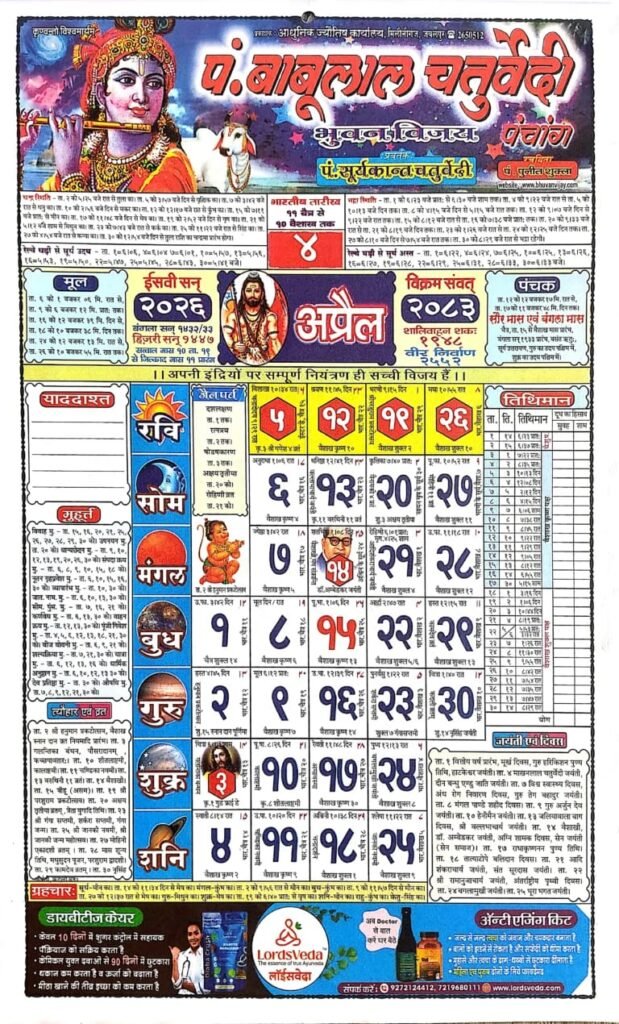
*Akshaya Tritiya note: At sunrise on April 19, Dwitiya is technically still running (Tritiya begins later that morning, at 10:49 AM, and continues until 7:27 AM the next day). Because most of the daytime and the entire afternoon of April 19 falls in Tritiya, classical rules (madhyahna-vyapini tithi) place the festival on April 19, Sunday — this is what every major Panchang, including Drik Panchang, follows, and it’s why the festival date doesn’t match the plain sunrise-tithi rule you’d expect from the table above.
†Missing Shukla Chaturthi: You’ll notice April 20 is Tritiya and April 21 is Panchami — Chaturthi doesn’t appear. This isn’t an error. The Moon moves faster than average this week, so the Chaturthi tithi runs its full course (about 20.5 hours) entirely between two sunrises without ever being the tithi at sunrise. This is a genuine, well-documented phenomenon called tithi kshaya (a “lost” tithi), and it’s a good example of why Panchang tables should be calculated fresh each month rather than templated.
Abhijit Muhurat stays close to local solar noon all month, drifting gently from roughly 12:00 PM–12:50 PM in early April to 11:52 AM–12:45 PM by month-end, as sunrise creeps earlier through spring.
Major Vrat & Festivals of April 2026 — Significance and Vidhi
Hanuman Jayanti — Thursday, 2 April
Observed on Chaitra Purnima, this marks the birth of Lord Hanuman. Devotees rise before sunrise, bathe, wear saffron or red, and visit a Hanuman temple, reciting the Hanuman Chalisa and Sundarkand. Many keep a fast until the evening aarti, and it’s traditional to distribute boondi or besan laddoo as prasad. Since the Purnima tithi is present right through the morning, early hours are considered the most favourable window for puja.
Sankashti Chaturthi — Monday, 6 April
This monthly Chaturthi is dedicated to Lord Ganesha, observed to remove obstacles. Devotees typically fast through the day, breaking it only after sighting the moon in the evening and offering modak or til (sesame) laddoo.
Varuthini Ekadashi — Monday, 13 April
One of two Ekadashis this month, dedicated to Lord Vishnu. Traditional practice: begin sattvic eating from Dashami evening, avoid grains on the Ekadashi itself, spend the day in Vishnu-Lakshmi puja and Vishnu Sahasranama recitation, and break the fast (parana) after sunrise on Dwadashi (April 14), within the parana window rather than at will.
Baisakhi / Mesha Sankranti — Tuesday, 14 April
This is the Sun’s entry into Aries and the start of the solar new year — important across North India as a harvest festival and, for Sikhs, as the anniversary of the founding of the Khalsa Panth in 1699. It’s traditionally an auspicious day for charity, a holy dip if a river or tirtha is nearby, and new beginnings.
Pradosh Vrat — Wednesday, 15 April & Wednesday, 29 April
Pradosh Vrat falls on Trayodashi (the 13th tithi) of both fortnights, dedicated to Lord Shiva. The most important window is Pradosh Kaal — roughly the 90 minutes straddling sunset. Based on this month’s sunset times, that puts the window around 5:15–7:35 PM on April 15 and 5:25–8:05 PM on April 29. Devotees offer Panchamrit (milk, curd, honey, sugar, ghee) to the Shivling and chant “Om Namah Shivaya” or the Mahamrityunjaya Mantra.
Masik Shivratri — Thursday, 16 April
Falling on Krishna Chaturdashi, this monthly observance for Shiva is marked with a night-long vigil (jagran), Rudrabhishek, and fasting broken the following morning.
Vaishakh Amavasya — Friday, 17 April
Known regionally as Chaitra Amavasya (in Amanta calendars) or Vaishakh Amavasya (in North Indian Purnimanta calendars), this new-moon day is set aside for Pitru Tarpan — offering water, black sesame and reverence to ancestors, usually facing south, followed by charity and a lamp lit under a peepal tree.
Akshaya Tritiya — Sunday, 19 April
One of the few “self-auspicious” days of the year, meaning no separate muhurat calculation is needed — the whole day is considered fit for new ventures, gold purchase, charity, and beginning spiritual practices. It commemorates events like Sudama’s visit to Krishna and the descent of the Ganga, and it’s the traditional day Ved Vyasa is said to have begun narrating the Mahabharata to Ganesha.
Mohini Ekadashi — Monday, 27 April
The Shukla Paksha Ekadashi of Vaishakh, associated with Vishnu’s Mohini avatar during the Samudra Manthan. As with Varuthini Ekadashi, the fast begins with sattvic food from Dashami and is broken after sunrise on Dwadashi (April 28), within the correct parana window.
Monthly Rashifal (Rashi Predictions) — April 2026
The following is drawn from traditional Vedic astrology and is meant for reflection and entertainment, not as a factual forecast. Please don’t use it as a substitute for professional guidance on health, finance, or major life decisions.
- Aries (Mesh): A month for visible career progress; Baisakhi’s solar energy favours bold moves. Simple remedy: offer water to the Sun each morning.
- Taurus (Vrishabh): Good signs for property, vehicles, and recovering pending dues. Favour Fridays for financial decisions.
- Gemini (Mithun): Strong month for partnerships and communication-heavy work; students preparing for exams should see steady gains.
- Cancer (Kark): Financial position improves gradually; a short pilgrimage or temple visit is favoured mid-month.
- Leo (Simha): Confidence and recognition at work rise, especially around Baisakhi as the Sun strengthens your sign’s ruling planet.
- Virgo (Kanya): Useful professional connections and possible travel; pay attention to health routines as the season changes.
- Libra (Tula): New income avenues may open; support from seniors and colleagues is likely.
- Scorpio (Vrishchik): A good month for career movement, including delayed promotions or raises finally coming through.
- Sagittarius (Dhanu): Vishnu’s blessings are said to favour this sign strongly this month; long journeys and spiritual study go well.
- Capricorn (Makar): Watch your diet and avoid speculative investments; steady, unglamorous effort pays off best.
- Aquarius (Kumbh): Relationships deepen; business partnerships could bring solid gains.
- Pisces (Meen): A favourable month for overcoming rivals and for competitive exam results; old health issues may finally ease.
Seasonal Wellness Notes for Chaitra–Vaishakh
Classical Ayurveda treats this transitional period — moving from the cool, damp late-winter Kapha season into early summer — as a time to lighten the diet and support digestion. General, non-prescriptive guidance many people find useful this time of year:
- Favour freshly cooked, warm, lightly spiced food over heavy, oily, or stale food as temperatures rise.
- Boil drinking water if its source or storage is uncertain, especially with the seasonal shift.
- A short daily routine of pranayama (such as anulom-vilom) and a brief morning walk is commonly recommended for this transitional season.
(This is general seasonal-wellness information, not medical advice — please consult a qualified doctor or Ayurvedic practitioner for anything specific to your health.)
Frequently Asked Questions
Which Hindu months does April 2026 cover? April 2026 covers the last two weeks of Chaitra and the first two weeks of Vaishakh, in Vikram Samvat 2083 and Shaka Samvat 1948.
When exactly is Hanuman Jayanti in 2026? Thursday, 2 April 2026 — not April 1, despite what some calendars show. The Purnima tithi is present at sunrise on the 2nd, which is the deciding factor.
Is Buddha Purnima in April 2026? No. Vaishakh Purnima, on which Buddha Purnima is observed, falls on Friday, 1 May 2026 this year — the day after April ends.
When is Akshaya Tritiya in 2026? Sunday, 19 April 2026.
What is Rahu Kaal and should I avoid starting things during it? Rahu Kaal is a roughly 90-minute period each day, calculated from sunrise and sunset, traditionally considered inauspicious for starting new or important work. Many people simply avoid scheduling travel, big purchases, or ceremonies during this window, though it isn’t observed by everyone equally strictly.
Does this Panchang apply across all of North India? The tithi, nakshatra, and festival names apply broadly across North India (UP, MP, Bihar, Rajasthan, Uttarakhand, Haryana, Delhi, Chhattisgarh). The clock times (sunrise, sunset, Rahu Kaal) are specific to New Delhi and will shift slightly for other cities.