For millions of Hindu households across Uttar Pradesh, Madhya Pradesh, Bihar, Rajasthan, Uttarakhand, Haryana, Delhi and Chhattisgarh, the printed Babu Lal Chaturvedi Calendar February 2026 has long served as a daily companion for deciding auspicious timings, tracking vrat (fasts), and following the rhythm of tithis, nakshatras and yogas through the year.
February 2026 is unusually rich in observance: it opens with Magha Purnima, moves through Vijaya Ekadashi and Maha Shivratri, reaches Phalguna Amavasya, and closes with Amalaki Ekadashi. Ancient texts such as the Skanda Purana, Padma Purana, Vishnu Purana and Nirnaya Sindhu describe this stretch of the calendar as especially favourable for worship, fasting, charity and self-discipline. Below you will find a day-by-day Panchang table, festival-specific worship methods, a monthly horoscope for all twelve zodiac signs, and seasonal Ayurvedic guidance — everything you need to plan the month with confidence.
February 2026 Full Panchang Table (Day-by-Day)
| Date | Day | Tithi & Paksha | Nakshatra & Yoga | Rahu Kaal (approx.) |
|---|---|---|---|---|
| 1 Feb 2026 | Sunday | Magha Purnima (Shukla) | Ashwini, Vishkumbha | 4:30 PM – 6:00 PM |
| 2 Feb 2026 | Monday | Phalgun Krishna Pratipada | Bharani, Preeti | 7:30 AM – 9:00 AM |
| 3 Feb 2026 | Tuesday | Krishna Dwitiya | Krittika, Ayushman | 3:00 PM – 4:30 PM |
| 4 Feb 2026 | Wednesday | Krishna Tritiya | Rohini, Saubhagya | 12:00 PM – 1:30 PM |
| 5 Feb 2026 | Thursday | Krishna Chaturthi | Mrigashira, Shobhana | 1:30 PM – 3:00 PM |
| 6 Feb 2026 | Friday | Krishna Panchami | Ardra, Atiganda | 10:30 AM – 12:00 PM |
| 7 Feb 2026 | Saturday | Krishna Shashthi | Punarvasu, Sukarma | 9:00 AM – 10:30 AM |
| 8 Feb 2026 | Sunday | Krishna Saptami | Pushya, Dhriti | 4:30 PM – 6:00 PM |
| 9 Feb 2026 | Monday | Krishna Ashtami (Kalashtami) | Ashlesha, Shoola | 7:30 AM – 9:00 AM |
| 10 Feb 2026 | Tuesday | Krishna Navami | Magha, Ganda | 3:00 PM – 4:30 PM |
| 11 Feb 2026 | Wednesday | Krishna Dashami | Purva Phalguni, Vriddhi | 12:00 PM – 1:30 PM |
| 12 Feb 2026 | Thursday | Krishna Dashami (continues) | Uttara Phalguni, Dhruva | 1:30 PM – 3:00 PM |
| 13 Feb 2026 | Friday | Krishna Ekadashi – Vijaya Ekadashi | Hasta, Vyaghata | 10:30 AM – 12:00 PM |
| 14 Feb 2026 | Saturday | Krishna Dwadashi–Trayodashi (Pradosh Vrat) | Chitra, Harshana | 9:00 AM – 10:30 AM |
| 15 Feb 2026 | Sunday | Krishna Chaturdashi – Maha Shivratri | Swati, Vajra | 4:30 PM – 6:00 PM |
| 16 Feb 2026 | Monday | Chaturdashi ends / Shivratri Parana | Vishakha, Siddhi | 7:30 AM – 9:00 AM |
| 17 Feb 2026 | Tuesday | Phalguna Amavasya (Bhaumvati Amavasya) | Anuradha, Vyatipata | 3:00 PM – 4:30 PM |
| 18 Feb 2026 | Wednesday | Shukla Pratipada | Jyeshtha, Variyana | 12:00 PM – 1:30 PM |
| 19 Feb 2026 | Thursday | Shukla Dwitiya | Mula, Parigha | 1:30 PM – 3:00 PM |
| 20 Feb 2026 | Friday | Shukla Tritiya | Purva Ashadha, Shiva | 10:30 AM – 12:00 PM |
| 21 Feb 2026 | Saturday | Shukla Chaturthi (Vinayak Chaturthi) | Uttara Ashadha, Siddha | 9:00 AM – 10:30 AM |
| 22 Feb 2026 | Sunday | Shukla Panchami | Shravana, Sadhya | 4:30 PM – 6:00 PM |
| 23 Feb 2026 | Monday | Shukla Shashthi | Dhanishtha, Shubha | 7:30 AM – 9:00 AM |
| 24 Feb 2026 | Tuesday | Shukla Saptami | Shatabhisha, Shukla | 3:00 PM – 4:30 PM |
| 25 Feb 2026 | Wednesday | Shukla Ashtami | Purva Bhadrapada, Brahma | 12:00 PM – 1:30 PM |
| 26 Feb 2026 | Thursday | Shukla Navami–Dashami | Uttara Bhadrapada, Indra | 1:30 PM – 3:00 PM |
| 27 Feb 2026 | Friday | Shukla Ekadashi – Amalaki Ekadashi | Revati, Vaidhriti | 10:30 AM – 12:00 PM |
| 28 Feb 2026 | Saturday | Shukla Dwadashi | Ashwini, Vishkumbha | 9:00 AM – 10:30 AM |
(Abhijit Muhurat sits close to local solar noon on every date — roughly 12:00 PM to 12:45 PM — and Karan cycles through the standard seven-day pattern of Bava, Balava, Kaulava, Taitila, Garaja, Vanija and Vishti.)
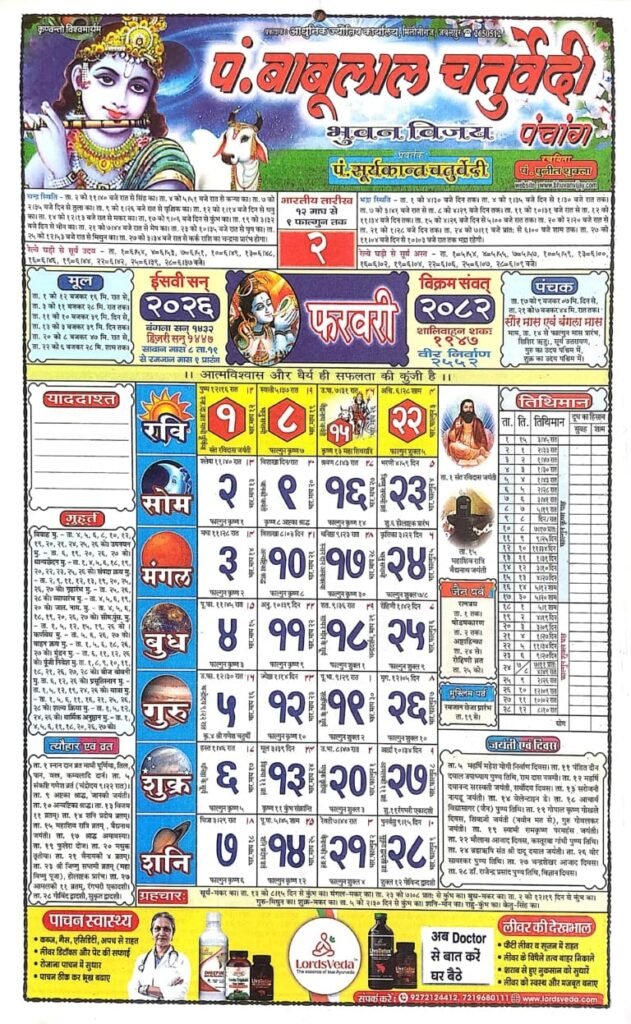
Day-Wise Panchang Highlights
1 February (Sunday) – Magha Purnima: The month opens on the full-moon day of Magh, an occasion for a holy dip, charity, and Satyanarayan Puja. Ashwini nakshatra and Vishkumbha yoga preside over the day, making it a strong day for closing old commitments before Phalgun begins.
2 February (Monday) – Phalgun begins: Krishna Paksha Pratipada opens the new lunar fortnight under Bharani nakshatra. Mondays are naturally suited to Shiva worship, so a simple offering of water and bel patra is considered fruitful.
3 February (Tuesday) – Dwitiya: Krittika nakshatra and Ayushman yoga favour health-related resolutions and the start of new fitness or wellness routines.
4 February (Wednesday) – Tritiya: Rohini nakshatra brings a gentle, nurturing energy that is traditionally linked to family harmony and creative work; Saubhagya yoga adds a note of good fortune.
5 February (Thursday) – Chaturthi: A Ganesh-favourable day under Mrigashira nakshatra. Many households offer durva grass and modak before starting anything new.
6 February (Friday) – Panchami: Ardra nakshatra with Atiganda yoga calls for a little extra patience; avoid rushing major decisions today.
7 February (Saturday) – Shashthi: Punarvasu nakshatra restores balance after the week; Saturday worship of Shani and Hanuman is customary.
8 February (Sunday) – Saptami: Pushya nakshatra is considered one of the most stable nakshatras of the month — good for savings, purchases and long-term planning.
9 February (Monday) – Ashtami (Kalashtami): Devotees of Kaal Bhairav observe a partial fast; Ashlesha nakshatra asks for caution in speech and disputes.
10 February (Tuesday) – Navami: Magha nakshatra favours ancestral worship and respect toward elders; Tuesdays are traditionally kept for Hanuman Chalisa recitation.
11 February (Wednesday) – Dashami: Purva Phalguni nakshatra supports matters of partnership, negotiation and paperwork.
12 February (Thursday) – Dashami continues: Uttara Phalguni nakshatra and Dhruva yoga bring stability; Thursday is ideal for Vishnu and Guru worship as the month moves toward Ekadashi.
13 February (Friday) – Vijaya Ekadashi: One of the most significant fasting days of the month, dedicated to Lord Vishnu. Hasta nakshatra governs the day; see the detailed vrat vidhi below.
14 February (Saturday) – Pradosh Vrat: Trayodashi tithi in the evening makes this a Pradosh Vrat day, ideal for evening Shiva worship ahead of Maha Shivratri.
15 February (Sunday) – Maha Shivratri: The single most important observance of the month. Swati nakshatra and Vajra yoga accompany the night-long vigil dedicated to Lord Shiva.
16 February (Monday) – Shivratri Parana: The Chaturdashi tithi concludes and devotees who fasted the previous night break their fast after sunrise, ideally before the Amavasya tithi begins.
17 February (Tuesday) – Phalguna Amavasya: Since this new-moon day falls on a Tuesday, it is observed as Bhaumvati Amavasya — a day for tarpan (ancestor offerings) and Hanuman worship.
18 February (Wednesday) – Shukla Pratipada: The bright fortnight begins under Jyeshtha nakshatra, marking a fresh start after the Amavasya.
19 February (Thursday) – Dwitiya: Mula nakshatra favours introspection and study; a good day to begin reading scripture.
20 February (Friday) – Tritiya: Purva Ashadha nakshatra and Shiva yoga are considered gentle and favourable for social gatherings.
21 February (Saturday) – Vinayak Chaturthi: A second Ganesh-focused day this month, under Uttara Ashadha nakshatra — many devotees keep a light fast until moonrise.
22 February (Sunday) – Panchami: Shravana nakshatra favours listening, learning and travel planning.
23 February (Monday) – Shashthi: Dhanishtha nakshatra and Shubha yoga make this an encouraging day for starting short projects.
24 February (Tuesday) – Saptami: Shatabhisha nakshatra is linked to healing; some devotees use this day for health-related vows.
25 February (Wednesday) – Ashtami: Purva Bhadrapada nakshatra calls for careful handling of finances and contracts.
26 February (Thursday) – Navami–Dashami: Uttara Bhadrapada nakshatra bridges into the approaching Ekadashi, a good day for charitable giving.
27 February (Friday) – Amalaki Ekadashi: The final major vrat of the month, dedicated to the Amla (Indian gooseberry) tree and Lord Vishnu; see the vidhi below.
28 February (Saturday) – Dwadashi: The month closes under Ashwini nakshatra, completing the 27-nakshatra cycle exactly as it began, and setting the stage for Holi preparations in March.
Major Vrats and Festivals of February 2026: Vidhi, Katha and Significance
1. Vijaya Ekadashi (13 February 2026)
Vijaya Ekadashi falls in the Krishna Paksha of Phalgun and is associated with the story of Lord Rama observing this fast before crossing the ocean to Lanka. Devotees who wish to overcome a difficult obstacle traditionally choose this Ekadashi for their vow.
How it is observed:
- Waking before sunrise, bathing, and wearing clean (preferably yellow) clothes
- Avoiding rice, grains and pulses through the day of the fast
- Offering tulsi leaves, yellow flowers and a diya to Lord Vishnu
- Keeping a night vigil with bhajans where possible
- Breaking the fast (Parana) after sunrise on Dwadashi, 14 February, within the correct Dwadashi window
2. Pradosh Vrat and Maha Shivratri (14–16 February 2026)
Pradosh Vrat on 14 February prepares the ground for Maha Shivratri, observed on the night of 15–16 February 2026. This is regarded as the night Lord Shiva and Goddess Parvati’s union is celebrated, and it is kept with a full day’s fast followed by worship through all four praharas (watches) of the night.
Puja essentials:
- Abhishek of the Shivling with water, raw milk, curd, honey, sugar and ghee (panchamrit)
- Offering bel patra (with an unbroken trio of leaves), datura, and white flowers
- Chanting “Om Namah Shivaya” and the Maha Mrityunjaya Mantra
- Keeping the night vigil (Jagran) and breaking the fast after sunrise on 16 February, before the Chaturdashi tithi lapses
Traditional belief holds that sincere observance of this vrat brings relief from ailments, protection for one’s children, and freedom from long-standing debts or disputes — though, as with all matters of faith, this is a devotional belief rather than a scientific claim.
3. Phalguna (Bhaumvati) Amavasya – 17 February 2026
Because this Amavasya falls on a Tuesday, it is known as Bhaumvati Amavasya, considered especially suitable for Hanuman worship and for pacifying difficulties linked to Mars (Mangal) in one’s horoscope.
Rituals typically followed:
- An early morning bath, followed by tarpan (offering of water and black sesame) to one’s ancestors, facing south
- Watering a peepal tree and lighting a mustard-oil lamp beneath it in the evening
- Donating food, clothes or sesame to those in need
4. Amalaki Ekadashi (27 February 2026)
The last major vrat of the month, Amalaki Ekadashi, is dedicated to the Amla tree, believed to have originated from Lord Vishnu’s own tears of joy. Devotees worship the Amla tree directly, circling it and offering water, vermillion and a lit lamp at its base, in addition to the standard Ekadashi fasting rules (no grains, restrained speech, and a night vigil where possible). The fast is broken the next morning, 28 February, during the Dwadashi period.
February 2026 Monthly Horoscope (Rashifal) for All 12 Zodiac Signs
The following predictions are based on traditional Vedic transits for February 2026 and are meant as general guidance rather than a personalised reading.
Aries (Mesh): Career matters gain momentum this month, with new responsibilities likely around mid-February. Financial gains from existing projects are indicated, and domestic life stays largely peaceful. Suggested practice: a daily Hanuman Chalisa recitation and an offering of water to the rising sun.
Taurus (Vrishabha): A favourable month for property, vehicles and home-related decisions. Pending payments may finally come through, and this is a reasonable window for long-term investment planning. Suggested practice: offering white sweets to Goddess Lakshmi on Fridays.
Gemini (Mithuna): Recognition at work improves, and a new business partnership could prove profitable. Students preparing for competitive exams may see encouraging results. Suggested practice: offering durva grass to Lord Ganesha on Wednesdays.
Cancer (Karka): Financial stability strengthens through the month, with savings likely to grow. This is also a good period for a short pilgrimage. Suggested practice: offering milk and unbroken rice to a Shivling on Mondays, along with the Maha Mrityunjaya Mantra.
Leo (Simha): With the Sun transiting your own sign, confidence and leadership qualities are highlighted. A promotion or added responsibility at work is likely, along with greater social standing. Suggested practice: Surya Namaskar each morning and recitation of the Aditya Hridaya Stotra.
Virgo (Kanya): Interest in spirituality or travel abroad increases. New, useful professional contacts are indicated, along with a gradual improvement in overall health. Suggested practice: lighting a mustard-oil lamp under a peepal tree on Saturdays.
Libra (Tula): New income opportunities open up, and support from friends or seniors proves valuable. Any pending legal matters move in your favour. Suggested practice: reciting the Shri Sukta on Fridays and donating fruit to those in need.
Scorpio (Vrishchika): A strong month for career growth, with a stalled promotion or increment likely to be resolved. Family responsibilities are met without excessive strain. Suggested practice: reciting the Bajrang Baan on Tuesdays.
Sagittarius (Dhanu): Divine grace favours long journeys, particularly of a religious nature, and spiritual understanding deepens. Overall, fortune supports your efforts this month. Suggested practice: worshipping a banana tree on Thursdays and donating chana dal.
Capricorn (Makara): Health and diet require closer attention this month; avoid speculative investments or gambling. Steady, disciplined effort brings moderate business gains. Suggested practice: worshipping Shani Dev on Saturdays with the mantra “Om Sham Shanaishcharaya Namah.”
Aquarius (Kumbha): Relationships deepen, with singles likely to encounter promising new connections. A business partnership could bring notable gains. Suggested practice: donating black sesame and mustard oil on Saturdays.
Pisces (Meena): Old rivalries or obstacles from competitors ease considerably. Recovery from a lingering health issue is indicated, and students preparing for exams see good results. Suggested practice: offering yellow flowers and yellow cloth to Lord Vishnu on Thursdays.
Ayurveda and Seasonal Health: Ritucharya for February 2026
Classical Ayurvedic texts by Charaka, Sushruta and Vagbhata treat the Magh–Phalgun transition as a season of changing temperatures, when the body is particularly sensitive to what is called Kapha-Vata imbalance. A few seasonal guidelines commonly followed at this time of year:
- Diet: Favour light, warm, freshly cooked food. Reduce heavy, oily and overly spiced dishes, and be cautious with food from roadside vendors as the season shifts.
- Water and hygiene: Boiled and cooled drinking water is traditionally recommended during seasonal transitions to reduce the risk of stomach infections.
- Daily routine: Waking before sunrise (Brahma Muhurta), along with at least 20–30 minutes of pranayama (Anulom-Vilom, Kapalbhati) and meditation, is considered supportive for immunity during this changing season.
This section reflects traditional Ayurvedic seasonal guidance and general wellness practice. It is not medical advice — please consult a qualified doctor for any specific health condition.
Frequently Asked Questions (FAQ)
Q1. Which Hindu month does February 2026 fall in? February 2026 begins in the final days of Magh month and moves into Phalgun from 2 February 2026 onward (Vikram Samvat 2083).
Q2. When is Maha Shivratri in February 2026? Maha Shivratri 2026 is observed on Sunday, 15 February, with the fast broken on the morning of 16 February after the Chaturdashi tithi concludes.
Q3. What are the Ekadashi dates in February 2026? Vijaya Ekadashi falls on Friday, 13 February 2026, and Amalaki Ekadashi falls on Friday, 27 February 2026.
Q4. Is the Amavasya in February 2026 a Somvati Amavasya? No. Since 17 February 2026 falls on a Tuesday, it is observed as Bhaumvati Amavasya, not Somvati Amavasya (which requires the new moon to fall on a Monday).
Q5. What is the significance of Magha Purnima on 1 February 2026? Magha Purnima marks the completion of the holy month of Magh and the end of Kalpavas at pilgrimage sites such as Prayagraj. It is considered auspicious for a holy bath, charity, and Satyanarayan Puja.
Q6. How is Rahu Kaal calculated for each day? Rahu Kaal is calculated by dividing the daylight hours between sunrise and sunset into eight equal parts; the specific segment considered inauspicious changes according to the day of the week. The table above uses the standard weekday-based Rahu Kaal windows, which may shift by 10–15 minutes depending on your exact location.