The Babu Lal Chaturvedi Calendar January 2026 carries the Hindu calendar across one of its most significant turning points of the year — the shift of the Sun from Dhanu (Sagittarius) into Makara (Capricorn), which ends the one-month Kharmas period and reopens the doors to auspicious ceremonies such as weddings, griha pravesh, and mundan. In the Purnimanta tradition followed across Uttar Pradesh, Madhya Pradesh, Bihar, Rajasthan, Haryana, Delhi, and Chhattisgarh, this month runs through the closing days of Pausha month and well into Magha month, carrying with it some of the year’s most widely observed vrats: Pausha Purnima, Shattila Ekadashi, Makar Sankranti, Mauni Amavasya, Vasant Panchami, Ratha Saptami, and Jaya Ekadashi.
This edition of the Babu Lal Chaturvedi Calendar January 2026 brings together a day-by-day Panchang overview, a verified festival calendar, Rahu Kalam and Abhijit Muhurat reference points, traditional vrat vidhi, a monthly rashifal for all twelve zodiac signs, and Ayurvedic guidance for the Shishir (winter) season — all in one place, so you don’t have to hunt across multiple sources.
📅 Babu Lal Chaturvedi Calendar January 2026: Festival & Vrat Dates (Verified)
| Date | Day | Festival / Vrat | Tithi |
|---|---|---|---|
| 1 January | Thursday | Pausha Shukla Trayodashi (Pradosh Vrat) | Trayodashi |
| 3 January | Saturday | Pausha Purnima Snan | Purnima |
| 6 January | Tuesday | Sakat Chauth / Sankashti Chaturthi | Krishna Chaturthi |
| 13 January | Tuesday | Lohri | Krishna Dashami |
| 14 January | Wednesday | Makar Sankranti, Pongal, Shattila Ekadashi | Krishna Ekadashi |
| 15 January | Thursday | Kanuma Pongal | Krishna Dwadashi |
| 16 January | Friday | Pradosh Vrat (Krishna Paksha) | Krishna Trayodashi |
| 17 January | Saturday | Masik Shivratri | Krishna Chaturdashi |
| 18 January | Sunday | Mauni Amavasya (Magha Amavasya) | Amavasya |
| 22 January | Thursday | Ganesh Jayanti (Til Kund Chaturthi) | Shukla Chaturthi |
| 23 January | Friday | Vasant Panchami (Basant Panchami), Saraswati Puja | Shukla Panchami |
| 25 January | Sunday | Ratha Saptami | Shukla Saptami |
| 26 January | Monday | Bhishma Ashtami, Republic Day | Shukla Ashtami |
| 29 January | Thursday | Jaya Ekadashi | Shukla Ekadashi |
| 30 January | Friday | Pradosh Vrat (Shukla Paksha) | Trayodashi |
| 31 January | Saturday | Magha Purnima Snan begins (Purnima on 1 Feb) | Chaturdashi |
Regional note: In the Amanta calendar followed in Maharashtra, Karnataka, Andhra Pradesh, Telangana, and Gujarat, the same tithis are named under the Pausha–Magha transition slightly differently, but the festival dates themselves remain identical.
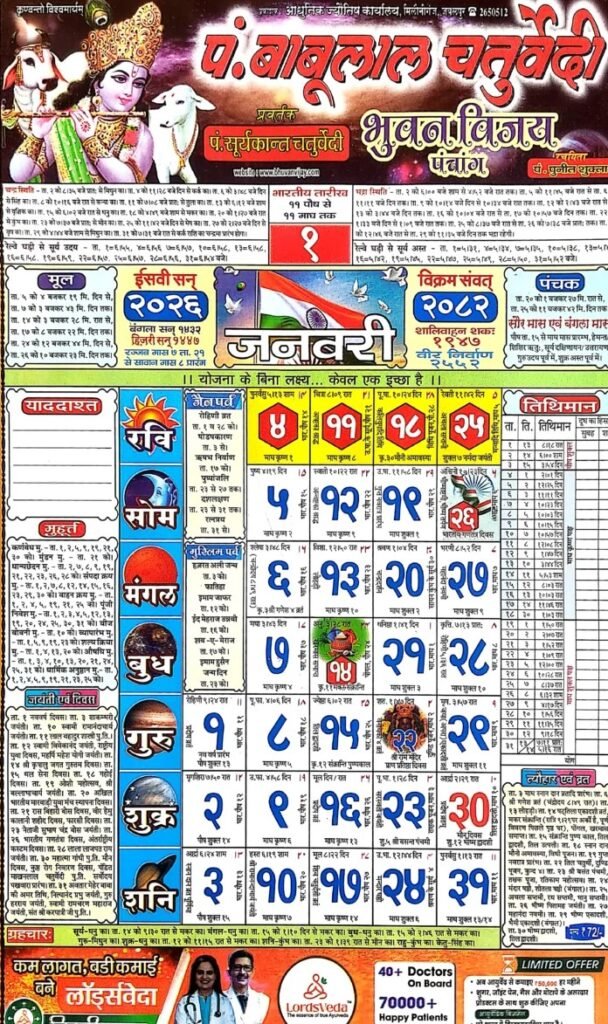
🌅 Babu Lal Chaturvedi Calendar January 2026: Daily Panchang, Sunrise, Sunset & Rahu Kalam
Sunrise and sunset times below are calculated for New Delhi (IST); they will vary by roughly 15–25 minutes for cities further east (like Kolkata or Guwahati) or west (like Ahmedabad or Jaipur). Rahu Kalam is shown using the standard weekday-based window used across North Indian Panchangs.
| Date | Day | Paksha & Tithi | Sunrise | Sunset | Rahu Kalam* | Special Day |
|---|---|---|---|---|---|---|
| 1 Jan | Thu | Pausha Shukla Trayodashi | 7:14 AM | 5:34 PM | 1:30–3:00 PM | Pradosh Vrat |
| 2 Jan | Fri | Pausha Shukla Chaturdashi | 7:14 AM | 5:35 PM | 10:30 AM–12:00 PM | — |
| 3 Jan | Sat | Pausha Purnima | 7:15 AM | 5:35 PM | 9:00–10:30 AM | Purnima Snan |
| 4 Jan | Sun | Krishna Pratipada | 7:15 AM | 5:36 PM | 4:30–6:00 PM | — |
| 5 Jan | Mon | Krishna Dwitiya–Tritiya | 7:15 AM | 5:37 PM | 7:30–9:00 AM | — |
| 6 Jan | Tue | Krishna Chaturthi | 7:15 AM | 5:38 PM | 3:00–4:30 PM | Sakat Chauth |
| 7 Jan | Wed | Krishna Panchami | 7:15 AM | 5:38 PM | 12:00–1:30 PM | — |
| 8 Jan | Thu | Krishna Shashthi | 7:15 AM | 5:39 PM | 1:30–3:00 PM | — |
| 9 Jan | Fri | Krishna Saptami | 7:15 AM | 5:40 PM | 10:30 AM–12:00 PM | — |
| 10 Jan | Sat | Krishna Ashtami | 7:16 AM | 5:41 PM | 9:00–10:30 AM | — |
| 11 Jan | Sun | Krishna Navami | 7:16 AM | 5:42 PM | 4:30–6:00 PM | — |
| 12 Jan | Mon | Krishna Dashami | 7:16 AM | 5:42 PM | 7:30–9:00 AM | — |
| 13 Jan | Tue | Krishna Dashami (extended) | 7:15 AM | 5:43 PM | 3:00–4:30 PM | Lohri |
| 14 Jan | Wed | Krishna Ekadashi | 7:15 AM | 5:44 PM | 12:00–1:30 PM | Makar Sankranti, Shattila Ekadashi |
| 15 Jan | Thu | Krishna Dwadashi | 7:15 AM | 5:45 PM | 1:30–3:00 PM | Kanuma Pongal |
| 16 Jan | Fri | Krishna Trayodashi | 7:15 AM | 5:46 PM | 10:30 AM–12:00 PM | Pradosh Vrat |
| 17 Jan | Sat | Krishna Chaturdashi | 7:15 AM | 5:46 PM | 9:00–10:30 AM | Masik Shivratri |
| 18 Jan | Sun | Amavasya | 7:15 AM | 5:47 PM | 4:30–6:00 PM | Mauni Amavasya |
| 19 Jan | Mon | Shukla Pratipada | 7:15 AM | 5:48 PM | 7:30–9:00 AM | — |
| 20 Jan | Tue | Shukla Dwitiya | 7:14 AM | 5:49 PM | 3:00–4:30 PM | — |
| 21 Jan | Wed | Shukla Tritiya | 7:14 AM | 5:50 PM | 12:00–1:30 PM | — |
| 22 Jan | Thu | Shukla Chaturthi | 7:14 AM | 5:51 PM | 1:30–3:00 PM | Ganesh Jayanti |
| 23 Jan | Fri | Shukla Panchami | 7:14 AM | 5:51 PM | 10:30 AM–12:00 PM | Vasant Panchami |
| 24 Jan | Sat | Shukla Shashthi | 7:13 AM | 5:52 PM | 9:00–10:30 AM | — |
| 25 Jan | Sun | Shukla Saptami | 7:13 AM | 5:53 PM | 4:30–6:00 PM | Ratha Saptami |
| 26 Jan | Mon | Shukla Ashtami | 7:13 AM | 5:54 PM | 7:30–9:00 AM | Bhishma Ashtami, Republic Day |
| 27 Jan | Tue | Shukla Navami | 7:12 AM | 5:55 PM | 3:00–4:30 PM | — |
| 28 Jan | Wed | Shukla Dashami | 7:12 AM | 5:56 PM | 12:00–1:30 PM | — |
| 29 Jan | Thu | Shukla Ekadashi | 7:11 AM | 5:56 PM | 1:30–3:00 PM | Jaya Ekadashi |
| 30 Jan | Fri | Shukla Dwadashi–Trayodashi | 7:11 AM | 5:57 PM | 10:30 AM–12:00 PM | Pradosh Vrat |
| 31 Jan | Sat | Shukla Chaturdashi | 7:10 AM | 5:58 PM | 9:00–10:30 AM | Magha Purnima Snan begins |
*Rahu Kalam windows are the standard approximate slots used in North Indian Panchangs, based on the weekday. They shift by a few minutes with the exact local sunrise, so treat the times as indicative rather than to-the-minute.
Abhijit Muhurat for this period stays close to solar noon in New Delhi and falls approximately between 12:05 PM and 12:47 PM on most days of the month — useful for beginning any new or auspicious task, except on Wednesdays, when Abhijit Muhurat is traditionally not observed.
🕉️ Detailed Look at January 2026’s Major Vrats and Festivals
Pausha Purnima (3 January, Saturday): The last full moon of the Pausha month is traditionally marked with a holy bath at sacred rivers, Satyanarayan Katha at home, and charity of food, blankets, or warm clothing to the needy — winter charity (Dana) on this day is considered especially meritorious. This day also marks the ceremonial start of the Magh Mela at Prayagraj.
Sakat Chauth / Sankashti Chaturthi (6 January, Tuesday): Mothers observe a day-long fast for the wellbeing and long life of their children, breaking it only after sighting and offering arghya to the moon in the evening. Lord Ganesha is worshipped with til (sesame) and gud (jaggery) sweets, from which the day gets its regional name “Til Chauth.”
Makar Sankranti & Shattila Ekadashi (14 January, Wednesday): This is the most significant day of the month. Astronomically, it marks the Sun’s transition into Makara Rashi (Capricorn), ending the Kharmas period. It is celebrated across India under different names — Makar Sankranti in the north, Pongal in Tamil Nadu, Uttarayan in Gujarat, and Magh Bihu in Assam. The same day also carries Shattila Ekadashi, on which devotees use sesame seeds in six different ways — bathing, offering, havan, eating, dana, and application — as an offering to Lord Vishnu, believed to cleanse past karmas.
Pradosh Vrat & Masik Shivratri (16–17 January): These two days sit back-to-back this month. Pradosh Vrat is observed in the evening (Pradosh Kaal, roughly 45 minutes before and after sunset), with abhishek of the Shivling using milk, curd, honey, and Ganga jal. The following day, Masik Shivratri extends the same devotion into a night-long vigil and Rudrabhishek.
Mauni Amavasya (18 January, Sunday): Considered one of the most powerful Amavasyas of the year, it is traditionally observed in silence (Mauna) with a holy dip at a sacred confluence, meditation, and pitru tarpan — offerings made to one’s ancestors. It also falls within the Magh Mela period at the Sangam in Prayagraj.
Ganesh Jayanti / Til Kund Chaturthi (22 January, Thursday): The birthday of Lord Ganesha as per the Magha month, observed with a day-long fast broken after moonrise, and worship of Ganesha with durva grass and modak.
Vasant Panchami (23 January, Friday): Dedicated to Goddess Saraswati, the deity of knowledge, music, and the arts. Yellow is the color of the day — yellow clothes, yellow sweets, and mustard flowers are offered. Educational institutions, especially those teaching music and art, often hold Saraswati Puja on this day, and children are formally introduced to writing (Akshar Abhyas) as part of the celebration. It also marks the traditional start of spring and the 40-day countdown to Holi.
Ratha Saptami (25 January, Sunday): Also known as Surya Jayanti, this day is dedicated to Surya Dev, observed with an early morning bath (ideally before sunrise) and Surya Namaskar, along with offerings of red flowers and jaggery.
Bhishma Ashtami & Republic Day (26 January, Monday): Bhishma Ashtami commemorates the day Bhishma Pitamah chose to leave his body after the Mahabharata war, observed with tarpan for ancestors. The same date is India’s Republic Day, marking the adoption of the Constitution in 1950.
Jaya Ekadashi (29 January, Thursday): The Shukla Paksha Ekadashi of Magha month, believed to free one from the fear of ghosts and evil spirits (Bhoot-Pret Baadha) when observed with sincere fasting and Vishnu Sahasranama recitation.
🪔 Vrat Vidhi: How to Observe the Key Fasts of the Month
Ekadashi Vidhi: Begin sattvic discipline from Dashami evening itself — avoid onion, garlic, and non-vegetarian food. On Ekadashi morning, bathe before sunrise, wear clean (preferably yellow) clothes, and offer tulsi leaves, yellow flowers, and sandalwood to Lord Vishnu. Rice is traditionally avoided on this day. Break the fast (Paran) the next morning within the prescribed Paran window, generally soon after sunrise on Dwadashi.
Pradosh Vrat Vidhi: Fast through the day and worship Lord Shiva during Pradosh Kaal — the period spanning roughly 45 minutes before and after sunset. Offer milk, curd, honey, sugar, and ghee (panchamrit) to the Shivling, followed by bilva leaves and a japa of “Om Namah Shivaya” or the Maha Mrityunjaya Mantra.
Purnima Vrat Vidhi: A holy bath in the morning, Satyanarayan Katha at home, and an evening arghya to the moon with milk and white flowers in a silver or copper vessel are the customary steps for this vrat.
Amavasya & Pitru Tarpan: Amavasya is considered ideal for remembering one’s ancestors. After a morning bath, tarpan is offered facing south with black sesame seeds, kusha grass, and water, followed by watering a peepal tree and lighting a mustard-oil lamp beneath it.
🔮 January 2026 Rashifal: Monthly Horoscope for All 12 Zodiac Signs
The following is based on traditional Vedic astrology and is meant for general guidance and entertainment. It should not replace personal or professional advice for major life decisions.
Aries (Mesh): A month of steady momentum at work, with the Sun and Mercury favoring recognition for ongoing projects. Family life stays warm. Suggested practice: Offer water to the rising Sun each morning.
Taurus (Vrishabh): Good news around property, vehicles, or long-pending payments is likely. Financial planning done this month tends to pay off later in the year. Suggested practice: Offer white sweets to Goddess Lakshmi on Friday.
Gemini (Mithun): Confidence and communication skills get a boost, helping in negotiations and public speaking. Students preparing for exams should see steady progress. Suggested practice: Offer durva grass to Lord Ganesha on Wednesday.
Cancer (Kark): Savings grow, and a pilgrimage or short spiritual trip may be on the cards. Family relationships feel more settled than in recent months. Suggested practice: Offer milk to Shivling on Monday.
Leo (Simha): With the Sun in your own sign, self-confidence and leadership visibility rise — a good month to push for that promotion or recognition. Suggested practice: Recite the Aditya Hridaya Stotra.
Virgo (Kanya): Interest in travel, spirituality, or higher studies grows. New professional contacts made this month could prove valuable later. Suggested practice: Light a mustard-oil lamp under a peepal tree on Saturday.
Libra (Tula): New income opportunities open up, and support from seniors or mentors helps resolve any pending disputes favorably. Suggested practice: Recite the Shri Sukta on Friday.
Scorpio (Vrishchik): Career growth looks promising, with a good chance of that delayed promotion or increment finally coming through. Suggested practice: Recite Bajrang Baan on Tuesday.
Sagittarius (Dhanu): Faith and fortune both work in your favor this month — long pending travel or pilgrimage plans may finally take shape. Suggested practice: Offer yellow items and worship a banana tree on Thursday.
Capricorn (Makar): Focus on health and diet, and steer clear of speculative investments. Steady, disciplined effort brings moderate but reliable gains in business. Suggested practice: Worship Lord Shani and recite “Om Sham Shanicharaya Namah” on Saturday.
Aquarius (Kumbh): Relationships deepen this month, and singles may find new connections forming. Business partnerships show good potential for growth. Suggested practice: Donate black sesame seeds and mustard oil on Saturday.
Pisces (Meen): Old health concerns start easing, and there’s a strong chance of success for anyone preparing for competitive exams. Suggested practice: Offer yellow flowers and a yellow cloth to Lord Vishnu on Thursday.
🌿 Ayurveda for January: Shishir Ritu (Winter) Wellness Guide
According to classical Ayurvedic texts, January falls in Shishir Ritu, the winter season, when Agni (digestive fire) is naturally strong but the body is also more prone to dryness and cold-related discomfort. A few traditional, general-purpose guidelines for the month:
- Diet: Favor warm, freshly cooked, and slightly oily or ghee-based meals over cold, raw, or leftover food; this is also the season Ayurveda associates with better tolerance for nourishing foods like til (sesame), gud (jaggery), dry fruits, and warm milk.
- Hydration: If you’re unsure about your water source, boiling and cooling drinking water is a simple, traditional precaution during the winter-to-spring transition.
- Daily Routine: Waking before sunrise, a warm oil self-massage (Abhyanga) before bathing, and layering up in the early morning and evening help the body adapt to the cold.
- Movement & Breath: Gentle yoga, a short walk in the mid-morning sun, and simple pranayama practices like Anulom-Vilom are traditionally recommended for this season.
This section reflects general traditional wellness practices and is not a substitute for medical advice. Please consult a qualified doctor or Ayurvedic practitioner for any specific health condition.
❓ Frequently Asked Questions – Babu Lal Chaturvedi Calendar January 2026
Q1. What does the Babu Lal Chaturvedi Calendar January 2026 cover? It covers the complete Pausha–Magha Panchang for the month — daily tithi, paksha, sunrise-sunset times, Rahu Kalam, all major vrats and festivals, a monthly rashifal, and seasonal Ayurveda guidance for North Indian readers.
Q2. When is Makar Sankranti in January 2026? Makar Sankranti falls on Wednesday, 14 January 2026, marking the Sun’s transit into Makara Rashi.
Q3. What is the date of Mauni Amavasya in 2026? Mauni Amavasya falls on Sunday, 18 January 2026.
Q4. When is Vasant Panchami (Basant Panchami) in 2026? Vasant Panchami is on Friday, 23 January 2026, forty days before Holi.
Q5. How many Ekadashi vrats fall in January 2026? Two: Shattila Ekadashi on 14 January (Krishna Paksha) and Jaya Ekadashi on 29 January (Shukla Paksha).
Q6. What is the Vikram Samvat and Shaka Samvat for January 2026? January 2026 falls under Vikram Samvat 2082 and Shaka Samvat 1947, since both change over at Chaitra Shukla Pratipada (around late March).
Q7. Is January 2026 a good month for weddings or griha pravesh? Auspicious ceremonies typically pause during Kharmas (mid-December to Makar Sankranti) and resume once the Sun enters Makara Rashi on 14 January. Exact Vivah Muhurat dates depend on the couple’s horoscope, so it’s best to confirm with your family priest or a certified Panchang.
Q8. What is Rahu Kalam and why does it matter? Rahu Kalam is a roughly 90-minute window each day, considered inauspicious for starting new or important work. It shifts with the day of the week and the local sunrise-sunset time — see the weekday-wise reference in the table above.